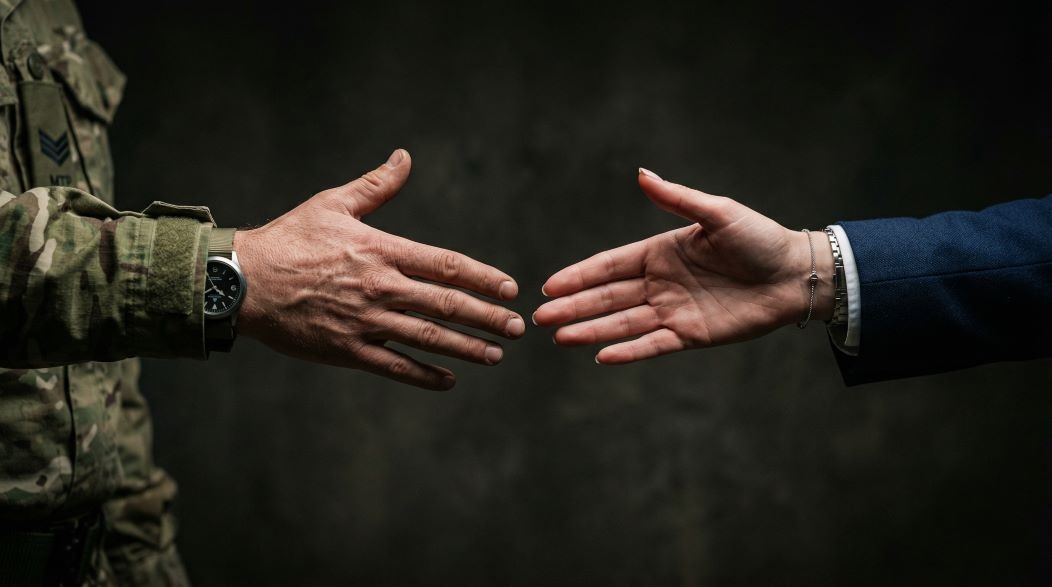

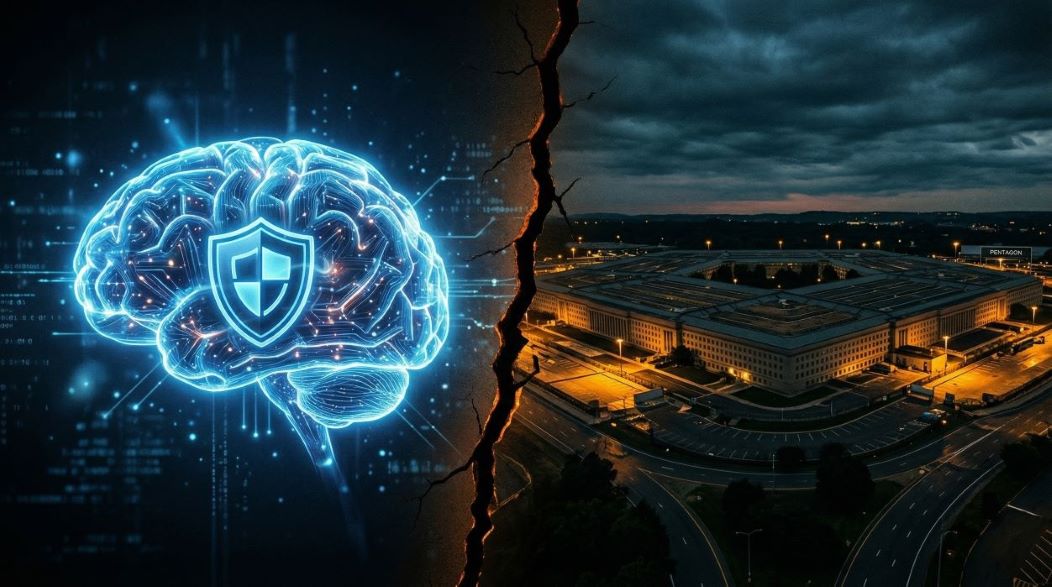
A $200 million government contract. A Friday night deadline. And an AI company that looked the Pentagon straight in the eye and said no. The Anthropic-Pentagon dispute is one of the most consequential clashes in the short history of AI, and most people are still not fully grasping what was actually at stake.
This was not a contract spat over pricing or delivery timelines. This was a fight about whether an AI company gets to decide how its technology is used in war, or whether the military gets to use it however it wants. Anthropic drew a line. The Pentagon crossed it. And now every AI company with a government contract is watching very carefully.
Here is the full story of the Anthropic Pentagon dispute, what both sides were actually arguing, and why this could reshape how AI is deployed in national security for years to come.
Contents
- How Anthropic Ended Up Inside the Pentagon
- The Two Lines Anthropic Refused to Cross
- The Pentagon’s Ultimatum and the Final Offer
- Dario Amodei’s Statement: “We Cannot in Good Conscience”
- Blacklisted: What Happens When Trump Steps In
- OpenAI Steps Into the Gap
- The Bigger Picture: AI Safety vs. Military Power
- Frequently Asked Questions
How Anthropic Ended Up Inside the Pentagon
Most people think of Anthropic as an AI safety company that makes a very good chatbot. But by mid-2025, Claude had become something much more significant inside the U.S. government. Claude was the first AI model deployed inside the military’s classified networks, and according to reporting from Axios, it was actively used during the Maduro raid in January 2026.
In July 2025, the Pentagon awarded Anthropic a contract worth up to $200 million to develop AI capabilities for national security applications. That is not a test pilot. That is a serious deployment. At the time, Anthropic described it as a chance to shape how AI gets used responsibly in the most high-stakes environments imaginable.
Honestly, the whole arrangement should have raised eyebrows from the start. A company built around the idea that AI could be existentially dangerous, deeply embedded in military classified systems, with only a handshake agreement on how the technology would be used. The collision course was baked in from day one.
The Two Lines Anthropic Refused to Cross
Throughout months of negotiations, Anthropic had one consistent position: they were happy to support lawful national security operations, but they wanted two hard limits written into the contract. The first was that Claude could not be used for mass surveillance of American citizens. The second was that Claude could not be used for fully autonomous weapons, meaning lethal targeting decisions made by AI without any human in the loop.
These are not fringe concerns. They are the kind of guardrails that most reasonable people, including plenty of people inside the Pentagon, would probably agree with in theory. Anthropic CEO Dario Amodei made the case publicly that current AI models, including Claude, are simply not reliable enough for life-or-death targeting decisions. The risk of hallucinations, miscalculations, or unintended escalation is real. Put an AI in sole command of lethal force and you are gambling with soldiers’ lives and civilian lives.
My take? Anthropic’s position here was not “woke.” It was engineering honesty. Any developer who has watched a large language model confidently make stuff up should be deeply uncomfortable with the idea of one deciding who gets shot at. That is not an ethics debate, that is a capability debate.
The Pentagon’s counterargument was that these restrictions were vague and unworkable, creating gray areas that could hamper real operations. Officials pointed to scenarios like shooting down enemy drone swarms, where waiting for human approval could cost lives. Pentagon CTO Emil Michael framed it bluntly: the DOD wants to “use AI without having to call Amodei for permission to shoot down enemy drone swarms that would kill Americans.”
The Pentagon’s Ultimatum and the Final Offer
Tensions that had been simmering for months came to a head in late February 2026. Defense Secretary Pete Hegseth gave Anthropic a hard deadline: agree to allow Claude to be used for “all lawful purposes” by 5 p.m. on Friday, February 27, or face serious consequences. The Pentagon’s final offer, sent to Anthropic overnight on Wednesday, was described by a spokesperson as a “best and final” position.
Anthropic read it and was not impressed. In a statement to CBS News, an Anthropic spokesperson said the contract language “made virtually no progress on preventing Claude’s use for mass surveillance of Americans or in fully autonomous weapons.” They added that new language supposedly offered as a compromise was “paired with legalese that would allow those safeguards to be disregarded at will.”
Behind the scenes, the Pentagon was already preparing for a different outcome. According to Axios, the DOD had reached out to defense contractors including Boeing and Lockheed Martin, asking them to evaluate their exposure to Anthropic. That is the kind of move you make when you have already decided how the negotiation ends.
Dario Amodei’s Statement: “We Cannot in Good Conscience”
On February 26, Dario Amodei published a blog post that will probably be studied in business ethics classes for a long time. He said Anthropic “cannot in good conscience accede” to the Pentagon’s demands. He acknowledged the threats. And then he called them out with a line that cut right to the heart of the contradiction: “Those latter two threats are inherently contradictory: one identifies us as a security risk; the other designates Claude as vital to national security.”
That is a sharp observation. You cannot simultaneously argue that a company is too dangerous to be trusted and that its technology is so essential you cannot function without it. The Pentagon was trying to have it both ways, using both a carrot and a stick in the same conversation.
Amodei also clarified what Anthropic was not objecting to. The company supported all lawful uses of AI for national security. It was not trying to block intelligence gathering, logistics optimization, threat analysis, or any of the dozens of applications where AI can genuinely help military personnel do their jobs more safely. They were drawing the line at two specific use cases, and according to Anthropic, those two cases had “not affected a single government mission to date.”
What struck me most was the tone: not defensive, not aggressive, just clear. Amodei did not want out of government work. He said the company’s strong preference was to continue serving the Department and warfighters, with the two safeguards in place. That is a negotiating position, not a walkout.
Blacklisted: What Happens When Trump Steps In
The deadline passed. And then things escalated fast. President Trump directed the U.S. government to stop using Anthropic’s products entirely. Defense Secretary Pete Hegseth formally declared Anthropic a “supply chain risk to national security,” a designation typically reserved for foreign adversaries. He directed that no contractor, supplier, or partner doing business with the U.S. military could conduct any commercial activity with Anthropic.
A six-month transition period was announced to allow the Pentagon, its contractors, and other government entities to migrate away from Claude to alternative systems. The $200 million contract is effectively terminated, though the wind-down gives both sides time to manage the operational disruption.
The “supply chain risk” label is a significant escalation. As national security experts noted in reporting from DefenseScoop, this classification is normally used for companies linked to foreign governments, not domestic AI startups. Applying it to Anthropic sends a message to every other AI company working with the government: fall in line, or this happens to you.
Here is what makes this particularly strange. Claude was the only AI deployed inside classified military networks. According to Axios, eight of the ten largest U.S. companies use Claude. This is not a minor vendor being shown the door. This is a deep, mission-critical dependency being ripped out on political grounds, and the six-month transition window reflects exactly how complicated that untangling is going to be.
OpenAI Steps Into the Gap
Within days of Anthropic’s blacklisting, OpenAI announced a new Pentagon partnership. The timing was not subtle. With Claude out of the picture, or at least on its way out, the Department of Defense needed an alternative, and OpenAI was ready with its hand up.
This matters because OpenAI had already agreed to ease restrictions on military use in classified systems. According to Axios, OpenAI, Google, and xAI had all consented to loosen their usage policies for military classified environments, while Anthropic had held its line. OpenAI stepping in confirms what many suspected: the Pentagon’s hardball approach to Anthropic was partly designed to set a precedent for all its AI negotiations.
OpenAI’s willingness to accept these terms will face scrutiny. The company has its own stated commitments to responsible AI development. Whether it has simply accepted the “all lawful purposes” framing without the hard limits Anthropic demanded remains an open question that will get a lot more attention as the new contract takes shape.
The Bigger Picture: AI Safety vs. Military Power
Strip away the contract numbers and the press statements, and the Anthropic Pentagon dispute is really about one question: who gets to set the rules for how AI is used in war? Right now, the answer the U.S. government is giving is: we do, not the company that built it.
That answer has serious implications. AI model safety is not just a software feature. As one expert explained to DefenseScoop, the guardrails in a model like Claude are not tacked on at the end of training. They are baked in from the start. Removing them is not like flipping a switch. It is a fundamental change to the model. Asking Anthropic to remove safety constraints is effectively asking them to build a different product.
The Defense Production Act reportedly came up in discussions as a potential tool to compel Anthropic to modify its model against its will. That is an extraordinary step and one that would have set a breathtaking precedent for government control over private AI development. It did not come to that, but the fact it was floated tells you everything about the power dynamic in play.
Meanwhile, the New York Times framed this accurately: the standoff is a decisive moment for how AI will be used in warfare. The decisions made right now, under this administration, with these specific actors, will shape the rules of engagement for AI in national security for the next decade. Anthropic chose to take a stand on that, at real financial and reputational cost. Whether history judges that as principled or naive depends entirely on what happens next.
What I keep coming back to is this: the two use cases Anthropic refused to support, mass surveillance of American citizens and autonomous lethal weapons without human judgment, are not radical positions. They are positions that most Americans, if asked directly, would probably agree with. The problem is that most Americans are not in the room when these contracts get negotiated.
Frequently Asked Questions
What exactly did Anthropic refuse to allow the Pentagon to do with Claude?
Anthropic refused to allow two specific uses of its AI model Claude: mass surveillance of American citizens, and fully autonomous weapons systems where AI makes lethal targeting decisions without any human involvement. The company supported all other lawful national security uses, including intelligence analysis, logistics, and operational planning. These two restrictions had been the central sticking point in months of negotiations with the Department of Defense.
Why did the Pentagon call Anthropic a “supply chain risk”?
Defense Secretary Pete Hegseth declared Anthropic a supply chain risk to national security after the company refused to meet his deadline for agreeing to unrestricted military use of Claude. This designation, normally applied to foreign-linked companies, bars Pentagon contractors from doing business with Anthropic. It was accompanied by President Trump’s directive for the entire federal government to stop using Anthropic products, with a six-month transition period to find alternatives.
Is Claude really used inside classified military systems?
Yes. Claude was reportedly the first AI model to be deployed inside the U.S. military’s classified networks. According to reporting from Axios, Claude was actively used during the Maduro raid in January 2026. The Pentagon awarded Anthropic a contract worth up to $200 million in July 2025. The deep integration of Claude into military operations is exactly why the six-month wind-down period was established, as an abrupt cut-off would have created serious operational disruptions.
Will OpenAI face the same pressure Anthropic did over military AI safeguards?
Possibly. OpenAI announced a new Pentagon deal shortly after Anthropic was blacklisted, and it had already agreed to ease restrictions on military use in classified systems. However, OpenAI has its own publicly stated commitments to responsible AI use. If the Pentagon pushes for truly unrestricted access, including the same autonomous weapons and surveillance uses Anthropic rejected, OpenAI will face a version of the same dilemma. The Anthropic dispute has clearly set a precedent the Pentagon intends to use in all its AI negotiations.
Could the U.S. government force Anthropic to change Claude using the Defense Production Act?
The Defense Production Act was reportedly discussed as a potential tool to compel Anthropic to modify Claude against its will. It did not come to that, but AI and legal experts flagged it as an extraordinary measure with major implications. One technical expert explained to DefenseScoop that removing safety guardrails from Claude is not a simple process since they are embedded throughout the model from training, not added as a surface-level filter. Invoking the DPA to force such changes would have been unprecedented and legally contested.
What Anthropic did takes guts, even if it cost them dearly. Walking away from a $200 million government contract, and the reputational halo that comes with being the Pentagon’s AI partner, because you refuse to enable two specific dangerous use cases, is the kind of move most companies never make. Whether or not you agree with every call Anthropic made in this negotiation, the fact that they made a call at all, and stuck to it under serious political and financial pressure, is worth paying attention to. The AI companies that come after them will be watched to see if they do the same, or quietly take the deal.